Stop Overpaying.
Start Recovering Tolls.
TollMatch™ audits your GPS, toll, and asset data to catch mismatches costing you 5-15% of toll spend - including dead transponders, wrong pairings, trailer billing errors, and max charges you shouldn’t be paying. Recover overpaid tolls with ready-to-file disputes.

Your Fleet Data Doesn't Match Your Toll Bills
When GPS traces, transponder records, and vehicle or trailer assignments fall out of sync, you pay for tolls that didn't occur, get charged max rates for partial trips, and misallocate costs to the wrong customer or cost center. TollMatch reconciles billed tolls against GPS and asset data so you catch these gaps before they hit your P&L.
Real-Time Sync
Instantly reconcile GPS traces with toll transactions. Catch discrepancies as they happen, not months later.
Cut Costs
Eliminate phantom charges and max-rate penalties. Recover thousands in overcharges every month.
P&L Protection
Safeguard your bottom line with automated validation. Stop billing errors before they impact finances.
Mismatch Types We Detect
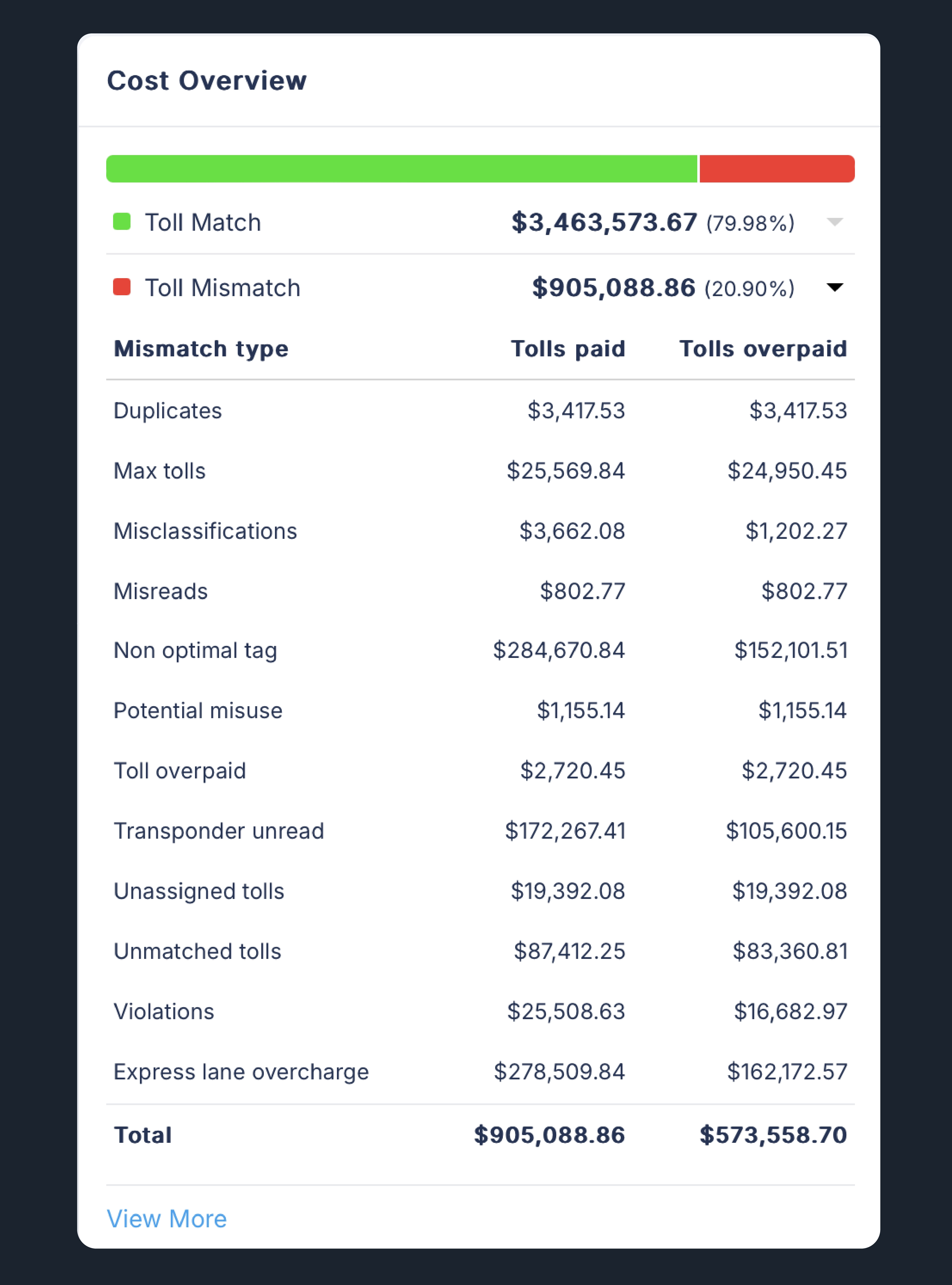
Duplicates
Max tolls
Misclassifications
Misreads
Non optimal tag
Potential misuse
Toll overpaid
Plate overcharge
Unassigned tolls
Unmatched tolls
Violations
Express lane overcharge
Why TollMatch?
Maximize long-term savings by improving truck-transponder pairing
Recover overpaid tolls with ready-to-file disputes
Accurate toll billing, driver reimbursements
Toll spend visibility, forecasting, and actionable insights
How to fix pairing and tag problems →
Everything You Need to File a Dispute
All the tools you need to validate, compare, and dispute toll charges with confidence
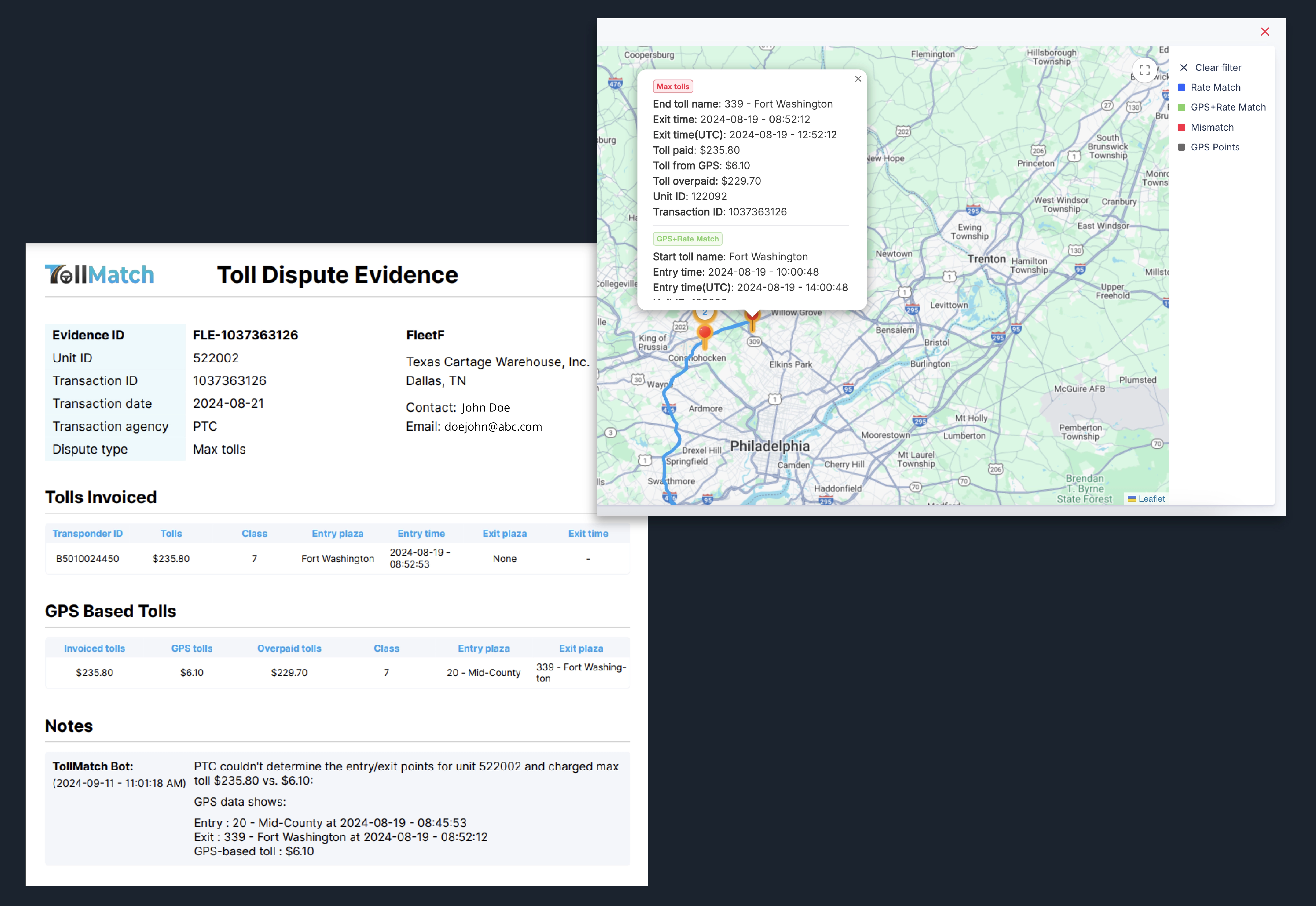
View toll charges mapped along your vehicle's exact GPS route
Automatically generated dispute notes for faster resolution
Accurate proof of entry and exit times at toll points
Instantly identify discrepancies to toll charges
One-click export of complete dispute documentation
Work a finding to a dispute and a refund →
How It Works
Connect
Plug into your GPS, toll, and fleet systems for a unified view of vehicles, tags, trailers, and trips.
Reconcile
Reconstruct trips from GPS, compare to billed tolls, and flag mismatches with clear dollar impact.
Recover & Prevent
Get dispute-ready packets (GPS map evidence, AI notes) and fix tag health, mapping, and trailer reconciliation to stop repeat losses.
What each data connection needs and how long setup takes →
With TollMatch, Tolls Become Just Another Financial Transaction
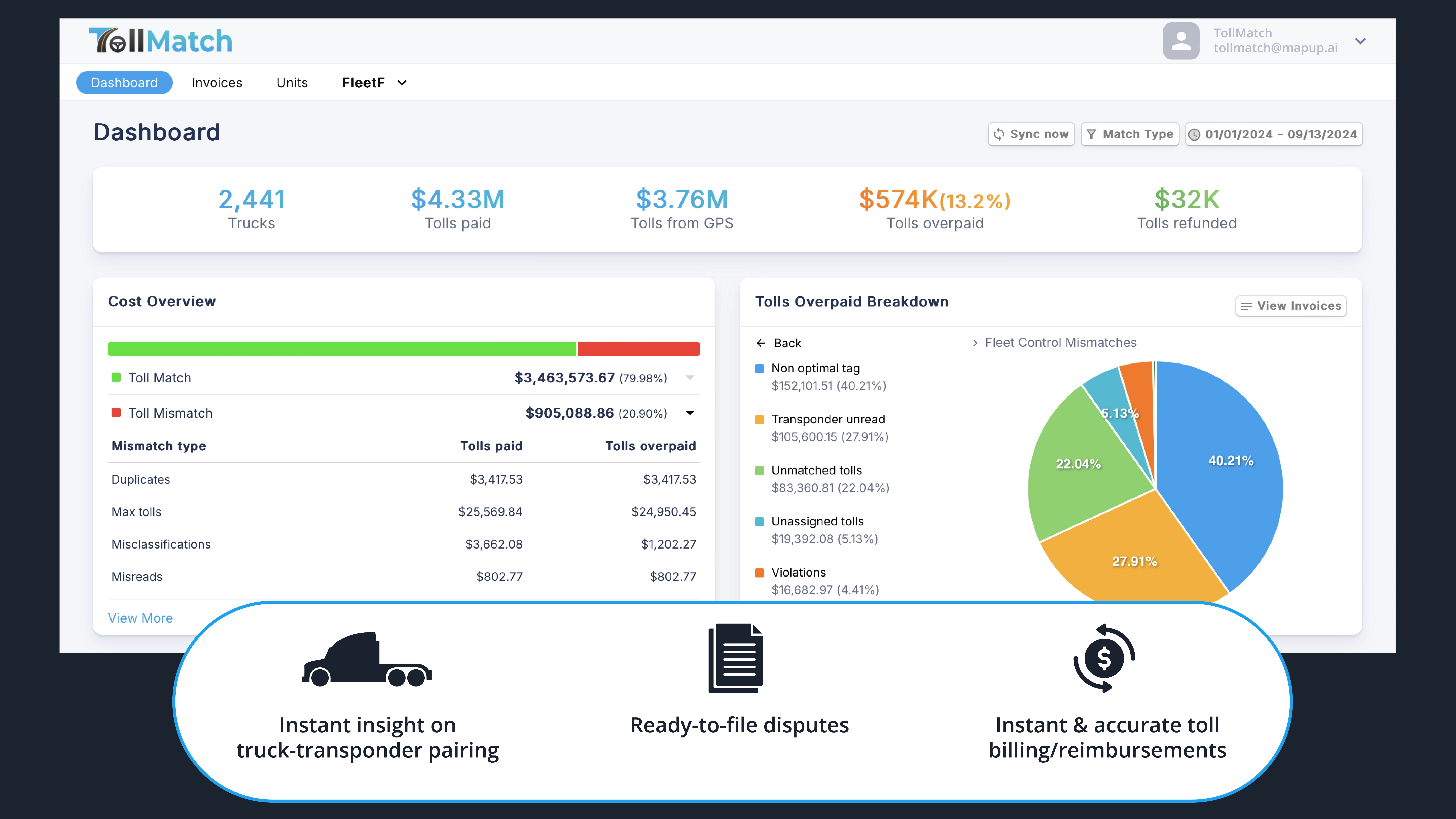
Real-time toll insight
Spend trends
Forecasts
Overpaid tolls
Transponder status
Actionable insights
The weekly and monthly review →
Put TollMatch to work
Already evaluating or using TollMatch?
Set up the audit, work every flag to a refund or a fix, and watch next month's overpaid number fall.
Get started
Set up your toll audit
Start with a history run on the toll and GPS data you already have, then connect the three streams, set up access, and run your first month. Timeline, troubleshooting and support on the same page.
TollMatch setup guide →Run your audit
Dashboard, disputes, fixes
Where things are in the dashboard, how to read a transaction, working a finding to a dispute and a refund, statuses, fixing the fleet-side causes, transponder health, the weekly review.
Toll manager guide →Know the flags
Every mismatch, explained
Twelve flags in two buckets. What each means, how TollMatch decides it, what usually causes it, and whether it is disputed with the agency or fixed inside the fleet.
Mismatch types →Find an answer
Questions from live fleets
Providers and accounts, what it catches, disputes and refunds, GPS and data, cost centers, security and support, grouped by who usually asks.
Browse the TollMatch FAQ →References: Product video · Log in
Results That Matter
Typical outcomes: 5 to 15% recovered, 40 to 80 hours saved per month, and faster, cleaner month-end reconciliation as leakage is prevented going forward.
Why TollMatch Is Different
Most toll programs consolidate payments; they don't validate accuracy. TollMatch audits your data integrity so tolls reflect true fleet operations.
| Capability | TollMatch | Standard Programs |
|---|---|---|
| GPS-verified toll validation | ✓ | ✗ |
| Unit-to-transponder mapping audit | ✓ | ✗ |
| Trailer billing reconciliation | ✓ | ✗ |
| Operational root-cause analytics | ✓ | ✗ |
| Ready-to-file dispute evidence | ✓ | ✗ |
| Transponder performance monitoring | ✓ | ⚠ |
| Cost-center drill-downs | ✓ | ⚠ |
⚠ = Limited functionality or requires add-ons
Customer stories
What Customers Are Saying
Every partnership unlocks a new story of efficiency, and savings. Explore what our customers are saying.

“The utilization of GPS data, fuel-in-tank telemetry, and route planning allows the MapUp products for managing and auditing toll expenses, as well as fuel purchase planning. These tools afford us the opportunity to better utilize data in our edge environments to run a more efficient fleet.”